There is a never ending list of things we should be teaching our children. As parents we begin with the best intentions, but failure can seem amazingly imminent when our children react negatively to our methods. The problem is not in our desire. The problem lies in our technique. I love the following story:
A mother scolded her child after he stepped past the corner. She had repeatedly told him not to go beyond the street corner. With a tear streaked face the child looked up and asked, "Mommy what is a corner?"
So often our children have no idea what we are saying or what our reasoning is. It is so important to make sure we talk to our children and help them understand what we are teaching and why. This usually takes a bit longer and requires patience. It is beneficial to us as parents to explain our reasoning to our children. Through it, we realize the importance of what we are teaching. Saying, "Because I said so..." is not an explanation and should make us question the validity of what we are teaching. Remember, example is always the best teacher!
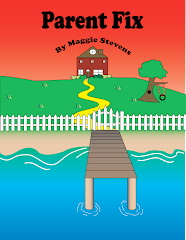
Read more about teaching your child reading the book ParentFix.
www.parentfix.com
Wednesday, February 3, 2010


Thursday, January 28, 2010
How to Enjoy a Teenager
The questions I get asked the most often are about teenagers. All parents have been teenagers, but how quickly we forget what it was like. I decided to blog today with basic advice to the parents of teenagers. Here goes:
How to Enjoy a Teenager
1. Change Your Expectations--We often look at teenagers in their adult bodies and expect them to act like adults. We must remember they are still children. One minute they will show the maturity of an adult. The next minute they may flip back into child mode, acting irresponsibly.
2. Show Understanding and Patience--The teenage years are not only puzzling times for you, they are very confusing for your child. Puberty is unpredictable. The strange behavior you are observing has to do with their changing physical bodies and hormones. Their bodies are growing faster now than at any other time of their lives. They often become confused and forgetful.
3. Sleep is Important. Teenagers internal clocks are different. Let them sleep when they need to sleep. They have to get up for school, let them sleep in on weekends or after school.
4. Peers Are Important. Get to know your child’s friends. You are still the most important person in your child’s life, but growing up is much easier if your child has friends to commiserate with. Make sure your child’s friends are welcome in your home. You may not always like your child’s friends, but don’t criticize them to your child. When you belittle your child’s friends, your child will feel you are attacking them personally. For example: If one of your daughter’s friends smokes, tell your daughter you disapprove of the smoking. Do not say, “I don’t like your friend.”
5. Educate Yourself and Be Teachable. Every single child is unique and so the teenage years will be different for each child. No parent knows it all! Read books, take classes, meditate and pray. You will learn more from this teenager than he does from you.
6. Have Fun. Spend time together. Your child will do this with you if you are not nagging, criticizing or coming up with a list of things for them to do. If you are struggling with an activity you both can enjoy, try food. There is not a teenage boy I know who will turn down an offer for food. For girls try food or shopping.
7. Listen. There is a reason God gave us two ears and one mouth. Instead of always trying to give advice to your teen, try listening to them. You will learn a lot about your teen if you can keep your mouth closed.
If you allow it, the teenage years can be the most rewarding years you spend with your child.
How to Enjoy a Teenager
1. Change Your Expectations--We often look at teenagers in their adult bodies and expect them to act like adults. We must remember they are still children. One minute they will show the maturity of an adult. The next minute they may flip back into child mode, acting irresponsibly.
2. Show Understanding and Patience--The teenage years are not only puzzling times for you, they are very confusing for your child. Puberty is unpredictable. The strange behavior you are observing has to do with their changing physical bodies and hormones. Their bodies are growing faster now than at any other time of their lives. They often become confused and forgetful.
3. Sleep is Important. Teenagers internal clocks are different. Let them sleep when they need to sleep. They have to get up for school, let them sleep in on weekends or after school.
4. Peers Are Important. Get to know your child’s friends. You are still the most important person in your child’s life, but growing up is much easier if your child has friends to commiserate with. Make sure your child’s friends are welcome in your home. You may not always like your child’s friends, but don’t criticize them to your child. When you belittle your child’s friends, your child will feel you are attacking them personally. For example: If one of your daughter’s friends smokes, tell your daughter you disapprove of the smoking. Do not say, “I don’t like your friend.”
5. Educate Yourself and Be Teachable. Every single child is unique and so the teenage years will be different for each child. No parent knows it all! Read books, take classes, meditate and pray. You will learn more from this teenager than he does from you.
6. Have Fun. Spend time together. Your child will do this with you if you are not nagging, criticizing or coming up with a list of things for them to do. If you are struggling with an activity you both can enjoy, try food. There is not a teenage boy I know who will turn down an offer for food. For girls try food or shopping.
7. Listen. There is a reason God gave us two ears and one mouth. Instead of always trying to give advice to your teen, try listening to them. You will learn a lot about your teen if you can keep your mouth closed.
If you allow it, the teenage years can be the most rewarding years you spend with your child.
Friday, December 4, 2009
Managing a Meltdown
So I know I said I was going to blog everyday, but since when have I followed through on anything? Well, I guess I follow through on some things. Lets just say I change gears alot. But I will at least try to get a little more regular, so here is something for the Holidays:
Managing a Meltdown
With all the excitement and stress of the holidays, it is prime time for children (and occasionally their parents) to have emotional meltdowns. What is the best way to handle it?
First, remember anger does no good for you or your child. Anger will only cause a bigger meltdown! To get a child calm, they must believe you are their ally....ready to help them meet their needs.
For young children: When a meltdown occurs, get down on the same level with your child so you can see eye to eye. Speak in a soft voice. Your demeanor will calm the child. In calm, reassuring words, ask them why they are upset. Then ask what you can do to help. When your child feels he is being understood, he will calm down. Let me give you an example.
Two children in a busy shopping mall are tired, crying and attracting attention. One mother, is embarrassed and demands the child stop crying immediately. The child knows that his feelings are not being heard and he continues to cry louder. The second mom sees that her child is genuinely upset. She focuses on the child, not on what others are thinking of her. She gently touches the child and asks, "What's wrong?" Then reassures "It's all right, I'm here. The mother's actions calm the child immediately.
Why does this work?
The mother is meeting the needs of her child. There is no threat to the child because he knows his mother's intention is to heal. The first mom is meeting her own needs. The second mom is meeting the needs of her child. When a child has this type of positive reaction from his parents over and over, the meltdowns happen less frequently. As a parent you are not only meeting your child's needs, but teaching them how to eventually calm themselves (by example)as they grow older.
For teenagers you handle the situation differently, but with the same goal in mind. Let's use the example of a teen battling with you over not wanting to attend an extended family Christmas party; instead, wanting to 'hang-out' with friends. Again first, remain stay calm. Let the child tell you why she does not want to go. Listen listen, listen and be understanding of her reasons. Ask and listen again to the details of what she and her friends plan to do. Then tell her every detail of the family party: who will be there, what will be going on, what food will be served, how long it will last. Express your love to her and how she will be missed if she chooses not to go. If you have shown a true understanding for your child's wants and needs, she will be more willing to negotiate with you. Maybe an hour at the family party and dad will drive her to meet up with her friends later. Teens are much more willing to agreeably join the family if they are not being forced.
The solution to meltdowns is to meet the needs of the child. This does not mean you are spoiling your child. Think how you feel when another adult listens and understands you. It gives you the confidence to move forward and accomplish the task at hand. Remember, when you meet the needs of your child, you are also strengthening the relationship.
The name of the book is
ParentFix by Maggie Stevens
www.parentfix.com
Sold at The King's English, Frost Book and online at Amazon
Managing a Meltdown
With all the excitement and stress of the holidays, it is prime time for children (and occasionally their parents) to have emotional meltdowns. What is the best way to handle it?
First, remember anger does no good for you or your child. Anger will only cause a bigger meltdown! To get a child calm, they must believe you are their ally....ready to help them meet their needs.
For young children: When a meltdown occurs, get down on the same level with your child so you can see eye to eye. Speak in a soft voice. Your demeanor will calm the child. In calm, reassuring words, ask them why they are upset. Then ask what you can do to help. When your child feels he is being understood, he will calm down. Let me give you an example.
Two children in a busy shopping mall are tired, crying and attracting attention. One mother, is embarrassed and demands the child stop crying immediately. The child knows that his feelings are not being heard and he continues to cry louder. The second mom sees that her child is genuinely upset. She focuses on the child, not on what others are thinking of her. She gently touches the child and asks, "What's wrong?" Then reassures "It's all right, I'm here. The mother's actions calm the child immediately.
Why does this work?
The mother is meeting the needs of her child. There is no threat to the child because he knows his mother's intention is to heal. The first mom is meeting her own needs. The second mom is meeting the needs of her child. When a child has this type of positive reaction from his parents over and over, the meltdowns happen less frequently. As a parent you are not only meeting your child's needs, but teaching them how to eventually calm themselves (by example)as they grow older.
For teenagers you handle the situation differently, but with the same goal in mind. Let's use the example of a teen battling with you over not wanting to attend an extended family Christmas party; instead, wanting to 'hang-out' with friends. Again first, remain stay calm. Let the child tell you why she does not want to go. Listen listen, listen and be understanding of her reasons. Ask and listen again to the details of what she and her friends plan to do. Then tell her every detail of the family party: who will be there, what will be going on, what food will be served, how long it will last. Express your love to her and how she will be missed if she chooses not to go. If you have shown a true understanding for your child's wants and needs, she will be more willing to negotiate with you. Maybe an hour at the family party and dad will drive her to meet up with her friends later. Teens are much more willing to agreeably join the family if they are not being forced.
The solution to meltdowns is to meet the needs of the child. This does not mean you are spoiling your child. Think how you feel when another adult listens and understands you. It gives you the confidence to move forward and accomplish the task at hand. Remember, when you meet the needs of your child, you are also strengthening the relationship.
The name of the book is
ParentFix by Maggie Stevens
www.parentfix.com
Sold at The King's English, Frost Book and online at Amazon
Tuesday, October 20, 2009
Relationships First
Isn't it interesting that we gain the most happiness in our lives through our relationships. Yet how often do we spend time learning how to improve those relationships. We usually just muddle through them and wonder why we can get so frustrated with the ones we love. It seems there are so many other things that demand our attention. Important things, like our jobs, our church responsibilities, preparing meals, cleaning the house, yardwork...the list goes on and on. Family relationships just get pushed to the side. It is time to put some effort into improving our relationships. This week, tell someone close to you why you appreciate them. Read a book that will give you new ideas on how to improve your life. Do an act of service for someone close to you, without them asking. Anyone have any other ideas? I would love to try them out on someone I love!
Saturday, October 10, 2009
Mean Girls
I was talking with my book distributor about parenting. He asked me this question, "Do you think it is easier to raise girls or boys?" Without thinking, I immediately answered, "Why boys, of course." He nodded his head in agreement. He has 3 girls. Now let me explain my response, especially to my daughter Stacie. Stacie, I loved raising you. I needed you in that sea of testosterone we lived in. I will always be grateful to have you as my daughter. What I found difficult in raising the one daughter I had,was watching how mean girls are to each other. It breaks my heart to watch some of the dastardly things girls do and say about one another. Boys aren't perfect, but they seem to fight it out and then move on. Most times, they seem to accept the people in their lives for what they are and do not continue finding fault. So lets unite women. We should try to be nicer to our gender. Love them and accept them for who they are!
I must add a comment to Stacie's group of friends. You are loyal wonderful friends. I am glad she found you or you found her.
I must add a comment to Stacie's group of friends. You are loyal wonderful friends. I am glad she found you or you found her.
Wednesday, October 7, 2009
I don't wanna talk about it!
How often do you say those words...or think them? One of the biggest breakdowns in communication comes when denying yourself the priviledge of talking things out, or talking things through or talking all the way around and back. When something is bothering us, why do we refuse to talk about it? Sometimes it is painful. Sometimes it requires effort. Most times we just put up a guard and refuse to discuss.
If our goal in this life is to progress or improve, we must re-evaluate the "I don't wanna talk about it" issue. I believe strongly in the forces of good and evil. If we are not progressing forward,we are letting a negative behavior control us. Don't let that evil influence stop you from figuring out what you need to do to improve your life. Talk about it. Find someone you can safely talk to. Someone who will give you honest feedback. Do what you have to do to make yourself open to solving a problem. Stop thwarting your own progress by not talking!
If our goal in this life is to progress or improve, we must re-evaluate the "I don't wanna talk about it" issue. I believe strongly in the forces of good and evil. If we are not progressing forward,we are letting a negative behavior control us. Don't let that evil influence stop you from figuring out what you need to do to improve your life. Talk about it. Find someone you can safely talk to. Someone who will give you honest feedback. Do what you have to do to make yourself open to solving a problem. Stop thwarting your own progress by not talking!
Sunday, October 4, 2009
Parenting Adult Children
I have had many friends ask me to write a parenting book on parenting adult children, since many of us have adult children living at home. It is difficult because as parents we want to parent our kids like we did when they were younger. The one thing I can tell you is there is no way you can parent your adult child like you did when they were teenagers. One very important thing to remember is that your child knows you. That statement means they know how you think, what you think. what your responses are and what your expectations are. You don't need to give them your opinion, unless they ask.
Many of our adult children are living at home I believe because life is more difficult than it was for us. Most are not just graduating from college in four years, but working towards master's degrees. Jobs are not plentiful. Housing is expensive. With the divorce rate so high, I think many are taking their time to commit to another person. What our adult children need from their parents is love, support and respect. They need to know you have confidence in them. You must remember that your child is an adult and when you give them that respect, they will in turn, respect you.
Many of our adult children are living at home I believe because life is more difficult than it was for us. Most are not just graduating from college in four years, but working towards master's degrees. Jobs are not plentiful. Housing is expensive. With the divorce rate so high, I think many are taking their time to commit to another person. What our adult children need from their parents is love, support and respect. They need to know you have confidence in them. You must remember that your child is an adult and when you give them that respect, they will in turn, respect you.
Subscribe to:
Posts (Atom)


 Posts
Posts


